
 Image 1 of 2
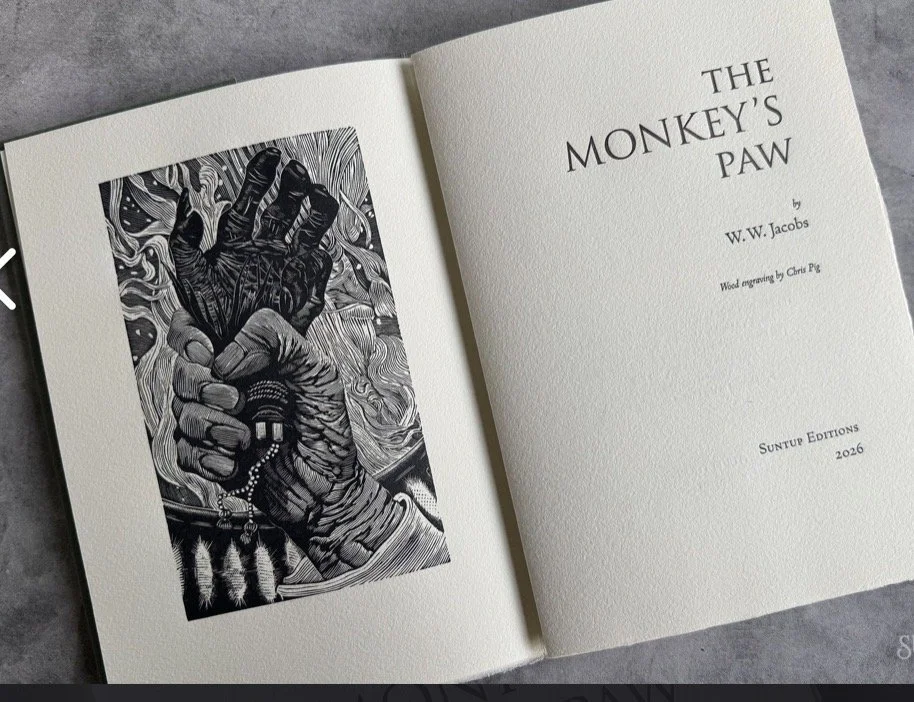 Image 2 of 2
First published in Harper’s Monthly in September 1902 and collected later that year in The Lady of the Barge, W. W. Jacobs’s chilling tale “The Monkey’s Paw” has become one of the most enduring works of supernatural fiction in the English language.
Set in an isolated home on a cold and stormy night, the story turns on the arrival of a mysterious talisman said to grant three wishes. What follows is a masterfully restrained tale of fate, grief, and the peril of tampering with forces meant to lie beyond human reach. With remarkable economy and atmosphere, Jacobs builds an unsettling tension that culminates in one of the most memorable endings in all of horror literature.
About The Edition
Our edition of “The Monkey’s Paw” by W. W. Jacobs is presented as part of our Short Story series in a single state of four hundred unnumbered copies with no rights attached. The edition measures 6¼” × 9¼” and features a wood engraving by award-winning artist and printmaker Chris Pig.
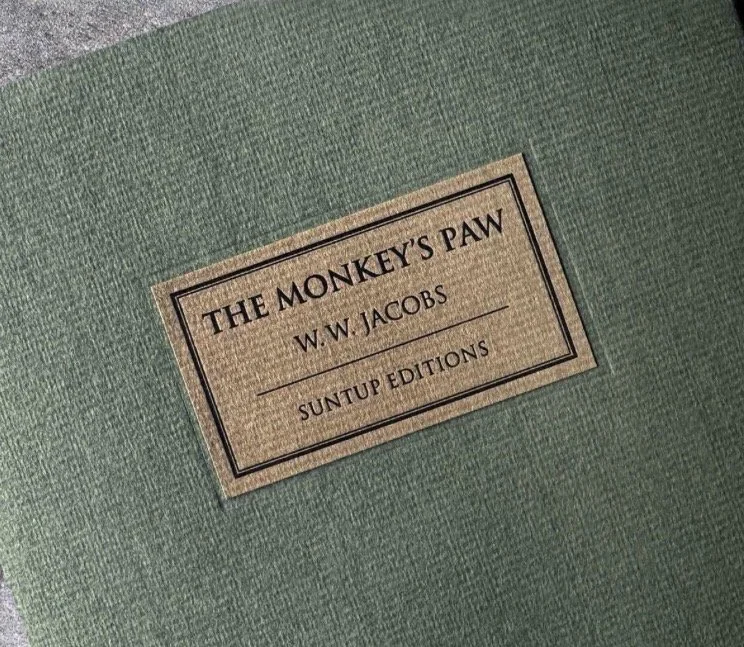
It is designed by Scott Vile and printed letterpress on his Heidelberg Cylinder in Buxton, Maine on mouldmade Hahnemühle Biblio. The wood engraving is printed from the original block and the typeface is Monotype Centaur. The title page is printed in two colors, requiring two passes through the press. The volume is 24 pages and is hand-sewn into a Hahnemühle Bugra wrapper with flaps by Nicoline Meyer in Hudson, New York and features a letterpress printed cover label. It is signed by the printer and wood engraver.
A Note on the Typography
The text is set in Monotype Centaur, a graceful roman typeface designed by Bruce Rogers and inspired by the fifteenth-century letterforms of Nicolas Jenson. Celebrated for its quiet elegance and balanced proportions, Centaur has long been associated with fine press printing and literary works of enduring merit. Its humanistic character and unhurried rhythm on the page complement the restrained, atmospheric prose of W. W. Jacobs’s “The Monkey’s Paw,” allowing the tension of the story to unfold naturally while maintaining a sense of classical dignity and timelessness.
First published in Harper’s Monthly in September 1902 and collected later that year in The Lady of the Barge, W. W. Jacobs’s chilling tale “The Monkey’s Paw” has become one of the most enduring works of supernatural fiction in the English language.
Set in an isolated home on a cold and stormy night, the story turns on the arrival of a mysterious talisman said to grant three wishes. What follows is a masterfully restrained tale of fate, grief, and the peril of tampering with forces meant to lie beyond human reach. With remarkable economy and atmosphere, Jacobs builds an unsettling tension that culminates in one of the most memorable endings in all of horror literature.
About The Edition
Our edition of “The Monkey’s Paw” by W. W. Jacobs is presented as part of our Short Story series in a single state of four hundred unnumbered copies with no rights attached. The edition measures 6¼” × 9¼” and features a wood engraving by award-winning artist and printmaker Chris Pig.
It is designed by Scott Vile and printed letterpress on his Heidelberg Cylinder in Buxton, Maine on mouldmade Hahnemühle Biblio. The wood engraving is printed from the original block and the typeface is Monotype Centaur. The title page is printed in two colors, requiring two passes through the press. The volume is 24 pages and is hand-sewn into a Hahnemühle Bugra wrapper with flaps by Nicoline Meyer in Hudson, New York and features a letterpress printed cover label. It is signed by the printer and wood engraver.
A Note on the Typography
The text is set in Monotype Centaur, a graceful roman typeface designed by Bruce Rogers and inspired by the fifteenth-century letterforms of Nicolas Jenson. Celebrated for its quiet elegance and balanced proportions, Centaur has long been associated with fine press printing and literary works of enduring merit. Its humanistic character and unhurried rhythm on the page complement the restrained, atmospheric prose of W. W. Jacobs’s “The Monkey’s Paw,” allowing the tension of the story to unfold naturally while maintaining a sense of classical dignity and timelessness.